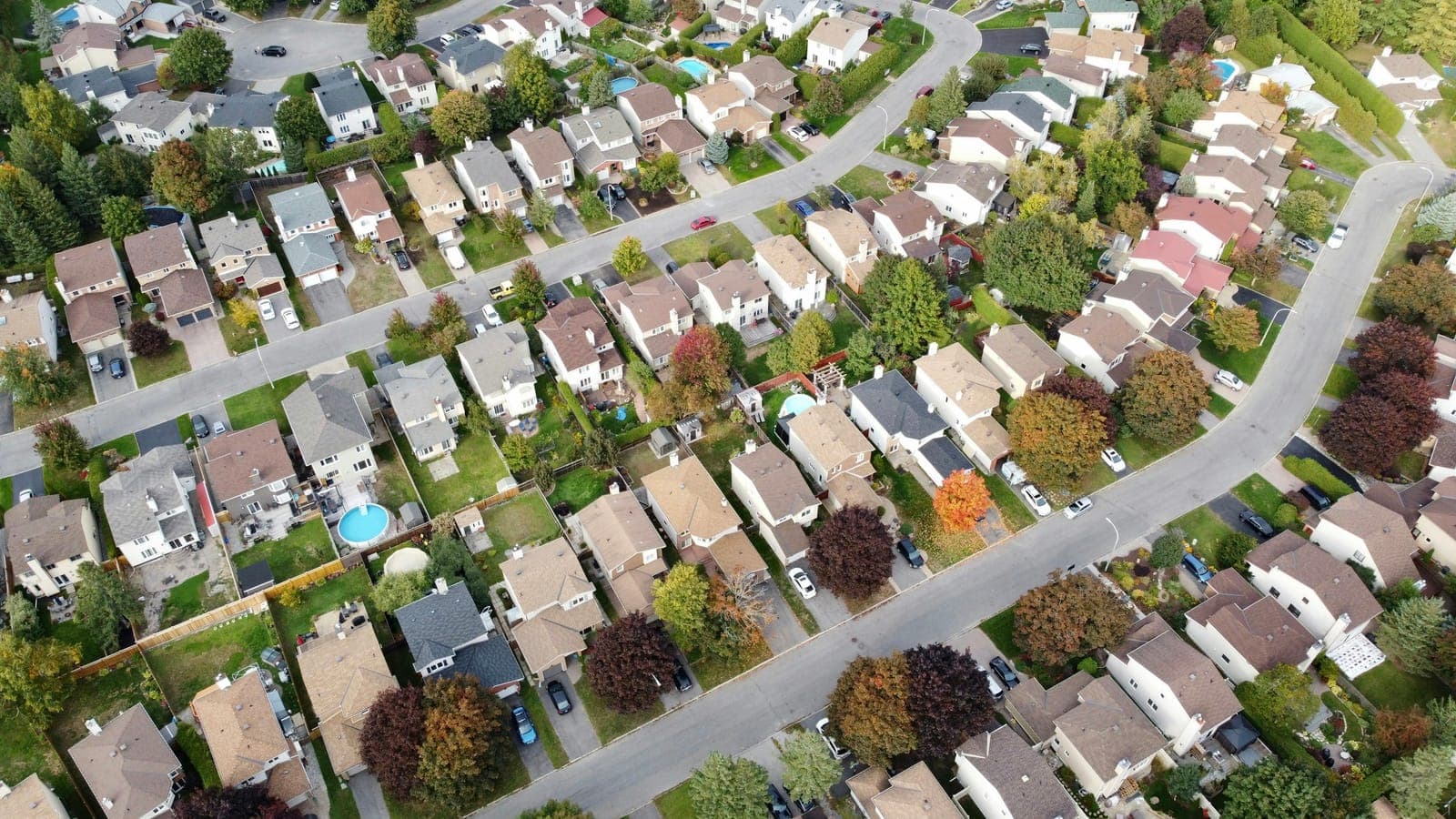
We've been moving families across the east metro for more than 15 years, and Aurora comes up in our schedule almost every week. It's Colorado's third-largest city now, home to roughly 398,000 people, and one of the most diverse communities in the state. Moving to Aurora, Colorado means picking from very different worlds under one city name, since Aurora sprawls across about 160 square miles and three counties. You could land in a brand-new home out by Southlands or a more affordable established block up north, and both are still Aurora. This guide walks through the neighborhoods, what homes and rent actually run, the commute, the job market around Anschutz and Buckley, the school-district split, and what your move will cost. If you'd rather just talk it through, call us anytime at (720) 241-3615.
Table of Contents
- Why People Are Moving to Aurora, Colorado
- Aurora Neighborhoods: From Southlands to North-Central
- Cost of Living: Aurora vs Denver
- Commute, the R Line, and Getting Around
- The Job Market: Anschutz, Buckley, and Defense
- Schools, Parks, and the Outdoors
- Altitude, Climate, and Colorado's Deadlines
- What an Aurora Move Costs and How to Book
- Frequently Asked Questions
Why People Are Moving to Aurora, Colorado
Aurora has grown into a city of about 398,000, which makes it Colorado's third largest behind Denver and Colorado Springs. A lot of our customers land here for a simple reason: you get the Front Range, the sunshine, and metro access for noticeably less than Denver proper. The median age sits around 35, so it skews younger than the country overall, and it's genuinely diverse, with large White, Hispanic, Black, and Asian communities all sharing the same neighborhoods. Aurora made Livability's Top 100 places to live in 2025, and once you spend a weekend here, the appeal isn't hard to see.
The thing newcomers miss is that "Aurora" covers wildly different submarkets. The city spreads across Arapahoe, Adams, and Douglas counties, so your county, your taxes, and even your school district shift depending on which side of town you choose. A move into southeast Aurora feels nothing like a move into the north-central blocks. We tell people to pick the part of Aurora that fits their commute and budget first, then shop homes inside that zone. It saves a lot of backtracking later.
- •Third-largest city in Colorado, roughly 398,000 residents as of 2025
- •One of the most diverse cities in the state, with a younger median age near 35
- •Spans three counties (Arapahoe, Adams, Douglas) across about 160 square miles
- •More affordable than Denver on both home prices and rent
- •Anchored by major employers at CU Anschutz, Buckley Space Force Base, and a defense cluster
- •Named to national best-places-to-live lists in 2025
Aurora Neighborhoods: From Southlands to North-Central
If there's one split worth understanding, it's southeast versus everywhere else. Southeast Aurora (think Tallyn's Reach, Saddle Rock, and the Southlands area) is the newer, higher-priced, family-oriented side, with master-planned streets and Cherry Creek schools. Tallyn's Reach homes run around $590,000 on the higher end of the city. More affordable inventory tends to cluster in northeast and north-central Aurora, where you'll find established homes and shorter commutes to Anschutz and downtown Denver. Neither side is better. They just fit different lives and budgets.
- •Tallyn's Reach: newer master-planned homes near Aurora Reservoir, median around $590K, Cherry Creek schools
- •Saddle Rock: golf-course community feel with larger lots and quick Southlands access
- •Heritage Eagle Bend: an active-adult, golf-oriented neighborhood popular with downsizers
- •Seven Hills and Mission Viejo: frequently cited among Aurora's safest, established family pockets
- •Southlands area: Colorado's large open-air shopping district anchors dining, errands, and weekend life
- •Village East and Prides Crossing: well-regarded established neighborhoods with mature trees and value
- •North-central blocks: older homes, shorter Anschutz and Fitzsimons commutes, lower entry prices
- •Areas near the R Line: condos and townhomes that make car-light commuting realistic
- •Northeast growth corridors: newer builds going up out toward E-470 and the airport
Wherever you're leaning, verify the home price and the assigned school by exact address before you commit, since both move fast in this market. Our crews work every corner of this city, from tight older staircases up north to the long driveways out by the reservoir, so once you've picked your spot we already know the parking quirks and access on your street.
Cost of Living: Aurora vs Denver
The money question is usually what tips people toward Aurora. The median home price runs roughly $460,000 to $466,000 as of late 2025 and early 2026, generally cheaper than Denver proper. Average rent lands around $1,400 to $1,450 a month, which is roughly 20 percent under the broader Denver metro median near $1,800. None of these are guarantees, and the market shifts, so confirm current numbers when you actually shop. Still, the pattern holds: your dollar tends to stretch a little further on this side of the metro.
Taxes deserve a quick look too, because Aurora's three-county sprawl means they vary by address. Effective property tax rates are low and depend on your county, running roughly 0.55% in Arapahoe-county portions and around 0.67% in Adams-county portions. Combined sales tax is about 8.5% across most of the city, climbing toward 9.15% in a few Denver-region ZIP codes like 80010, 80012, and 80014. It's worth checking the rate for a specific home rather than assuming one citywide figure.
Choosing Aurora over Denver proper
Advantages
- •Lower median home prices than Denver, often by a meaningful margin
- •Rent that runs a few percent under the metro median
- •Low effective property tax rates, especially in Arapahoe-county areas
- •Direct R Line light rail into downtown Denver and the Tech Center
- •Access to two large reservoirs and 100-plus parks
Considerations
- •Sprawl means very different submarkets under one city name
- •Taxes, schools, and county services shift by exact address
- •Sales tax climbs toward 9.15% in some Denver-region ZIPs
- •Southeast premium neighborhoods can rival Denver pricing
Commute, the R Line, and Getting Around
Aurora's commute story is better than a lot of newcomers expect, mostly thanks to the R Line. That light rail runs about 22 miles up the I-225 corridor with 16 stations, connecting Aurora to the A Line out to the airport, to downtown, and to the Denver Tech Center. A typical Aurora-to-Denver trip on the R Line takes around 40 minutes, with trains every 10 minutes at peak and 15 off-peak. If you'd rather not fight rush hour on the highways, picking a home near a station genuinely changes your daily life here.
By car, I-225 stitches together I-70 and I-25, so you can swing north toward the mountains or south toward the Tech Center without crossing downtown. The A Line and E-470 give you fast, low-stress access to Denver International Airport, which matters if you travel for work. Aurora is a driving city in much of its footprint, especially out southeast, so factor a real 8 a.m. commute into wherever you're shopping rather than the midday estimate your map app shows.
Quick transit and access notes for new Aurora residents
- •R Line: ~22 miles, 16 stations, roughly 40 minutes Aurora to downtown Denver
- •Train frequency: about every 10 minutes at peak, 15 off-peak
- •Airport: A Line and E-470 make DIA an easy, predictable trip
- •Highways: I-225 links I-70 and I-25 without routing you through downtown
- •House-hunting tip: test your real weekday commute before you sign anything
- •Car-light option: homes near R Line stations make one-car households workable
The Job Market: Anschutz, Buckley, and Defense
A big share of our Aurora moves are job-driven, and two anchors do most of the heavy lifting. The CU Anschutz Medical Campus is the largest academic health complex in the Rocky Mountains, home to UCHealth University of Colorado Hospital and Children's Hospital Colorado. Those two hospitals treat more than two million patients a year, and the campus drives an estimated $8.5 billion in statewide economic impact. If you or your partner work in healthcare, research, or anything adjacent, Anschutz is often the reason the map points at Aurora.
The other engine is defense and aerospace. Buckley Space Force Base contributes more than $2 billion to the local economy and sits at the center of a cluster that includes Raytheon, Lockheed Martin, and Northrop Grumman. Add Aurora Public Schools as a major employer and you've got a job base that's steadier than most. We move plenty of military and contractor families on tight timelines, so if your report date or start date is firm, tell us early and we'll build the schedule around it. We're available 24/7 for exactly that reason.
- •CU Anschutz Medical Campus: largest academic health complex in the Rockies
- •UCHealth University of Colorado Hospital and Children's Hospital Colorado: 2M-plus patients a year combined
- •Buckley Space Force Base: a $2 billion-plus economic engine for the city
- •Defense and aerospace cluster: Raytheon, Lockheed Martin, Northrop Grumman
- •Aurora Public Schools: one of the area's largest employers
Schools, Parks, and the Outdoors
School districts are where Aurora's geography matters most. The city is split mainly between Aurora Public Schools, the large and very diverse district covering central and north Aurora, and the higher-rated Cherry Creek School District, which serves much of the south and southeast. Because district lines don't always follow city limits, the single most important thing a family can do is confirm the assigned schools for an exact address before making an offer. Two homes a few blocks apart can feed entirely different districts.
The outdoor access here is underrated. Aurora has more than 100 parks, miles of trails, and two major reservoirs. Cherry Creek State Park wraps an 880-acre reservoir with about 35 miles of trails, boating, swimming, and a 100-plus acre off-leash dog park, all roughly 14 miles from downtown Denver. Aurora Reservoir is the quieter alternative, with swimming, boating, and a perimeter loop that's perfect for a morning ride. Between those two and the foothills an hour west, weekends fill themselves.
School and outdoors checklist before you buy or rent
- •Confirm your district by address: Aurora Public Schools or Cherry Creek, not just "Aurora"
- •Cherry Creek schools generally serve the south and southeast neighborhoods
- •Aurora Public Schools covers much of central and north Aurora
- •Cherry Creek State Park: 880-acre reservoir, ~35 miles of trails, big off-leash dog park
- •Aurora Reservoir: swimming, boating, and a quieter perimeter loop
- •100-plus city parks and miles of connected trails citywide
Altitude, Climate, and Colorado's Deadlines
Aurora's official elevation is about 5,471 feet, ranging roughly from 5,285 to 6,229 feet across the city, so you're solidly above Denver's Mile High mark. The thinner air is real for newcomers: headaches, fatigue, and trouble sleeping the first few days are common. Drink close to double your usual water, ease off alcohol and caffeine early on, and save the first big hike for after you've found your legs. The climate is semi-arid with 300-plus sunny days a year, about 62 inches of snow annually, and temperatures that swing roughly from the low 20s to the upper 80s through the year. Pack for layers, not seasons.
Colorado runs on real deadlines, and the late fees are easy to avoid. New residents must transfer an out-of-state driver license within 30 days of establishing residency, and title and register their vehicles within 90 days, both done in person at the county motor vehicle office. Since Aurora spans three counties, double-check which office serves your address. Confirm your utility providers by exact address too, because they vary across the city. None of this is hard, but it's the kind of thing that's much smoother on a calendar than a surprise.
- •Elevation: official 5,471 feet, ranging about 5,285 to 6,229 feet across town
- •Altitude tip: hydrate, go easy on caffeine and alcohol, ease into exercise
- •Climate: semi-arid, 300-plus sunny days, about 62 inches of snow a year
- •Driver license: transfer within 30 days of establishing residency
- •Vehicle title and registration: complete within 90 days, in person by county
- •Three counties: confirm your specific county office and utility providers by address
What an Aurora Move Costs and How to Book
Most moves into or around Aurora stay short-haul and inside Colorado, so the big cost drivers are home size, access like stairs and long carries, and timing. A local two-bedroom move in Aurora typically runs somewhere around $475 to $1,000 before stairs, packing, or storage add-ons. We keep our pricing readable up front, with no hidden fees. Base price goes by home size: $199 for a studio or one-bedroom, $349 for a two-bedroom, $449 for a three-bedroom, and $649 for four or more bedrooms. Distance adds $1.50 per mile only after the first 10 miles, which keeps most metro hops affordable.
Booking is simple. A 50% deposit holds your date, and the balance is due on move day, never before. From there you add only what you actually need: full or partial packing, piano and specialty handling, furniture disassembly and reassembly, storage pickup, box delivery, or packing supplies. You can see the full breakdown on our pricing page, or get an exact number for your home with a free online quote. Prefer to talk it through with a person? Call or text us at (720) 241-3615 anytime.
Easy ways to lower your Aurora move cost
- •Move mid-week and mid-month: Tuesday through Thursday and away from the month-end rush is the biggest lever
- •Avoid June through August if you can: peak season runs higher across the metro
- •Declutter first: fewer boxes and less furniture means less time billed
- •Pack the boxes yourself and let our crew handle the heavy, awkward, and fragile pieces
- •Verify your mover: Colorado PUC permit for in-state moves, FMCSA authority for interstate
We're a family-run Denver company that's been doing this since 2010, fully licensed and insured, with more than 7,000 completed moves and a perfect 5.0 rating across 102 five-star Google reviews and 35-plus on Thumbtack. We cover the full Denver metro, all of Colorado, and long-distance moves to all 50 states. Whether you're crossing town from Capitol Hill to Tallyn's Reach or coming in from across the country, owner Douglas Palmish and our crews will give you a clear price and a move day that doesn't eat your week. Grab a free online quote, or call (720) 241-3615 and we'll build the plan with you.
Frequently Asked Questions
Is moving to Aurora, Colorado a good idea, and how does it compare to Denver?
For a lot of people, yes. Moving to Aurora, Colorado usually means lower home prices and rent than Denver proper, plus direct R Line light rail into downtown and the Tech Center. The median home price runs roughly $460,000 to $466,000 and average rent lands near $1,400 to $1,450, both generally below the Denver metro. The trade-off is that Aurora sprawls across three counties, so taxes, schools, and services vary a lot by exact address. Confirm current prices when you shop, since the market moves.
What are the best neighborhoods in Aurora, Colorado?
It depends on your budget and life stage. Southeast Aurora (Tallyn's Reach, Saddle Rock, Heritage Eagle Bend, and the Southlands area) is the newer, higher-priced, family-oriented side with Cherry Creek schools, and Tallyn's Reach runs around $590,000. For more affordable, established homes and shorter commutes to Anschutz, look at north and north-central Aurora, including Village East and Prides Crossing. Seven Hills and Mission Viejo also rank among the city's safer, established pockets. Always verify the assigned school district by exact address.
How long is the commute from Aurora to downtown Denver?
On the R Line light rail, an Aurora-to-downtown trip takes about 40 minutes, with trains every 10 minutes at peak and 15 off-peak. The line runs roughly 22 miles up the I-225 corridor with 16 stations and connects to the A Line for the airport. By car, I-225 links I-70 and I-25 so you can reach the Tech Center or the mountains without crossing downtown. If you want a shorter commute, picking a home near an R Line station makes a real difference.
Which school district will my kids attend in Aurora?
Aurora is split mainly between two districts. Aurora Public Schools is the large, very diverse district covering central and north Aurora, while the higher-rated Cherry Creek School District serves much of the south and southeast. District lines don't always follow city limits, so two homes a few blocks apart can feed different districts. Confirm the assigned schools for the exact address before you make an offer or sign a lease.
How much does it cost to move within or to Aurora, Colorado?
A local two-bedroom move in Aurora typically runs about $475 to $1,000 before stairs, packing, or storage add-ons. Our base price goes by home size: $199 for a studio or one-bedroom, $349 for a two-bedroom, $449 for a three-bedroom, and $649 for four or more bedrooms, plus $1.50 per mile only after the first 10 miles with no hidden fees. A 50% deposit holds your date and the balance is due on move day. For an exact number, grab a free online quote or call (720) 241-3615.
What deadlines do new Colorado residents need to know after moving to Aurora?
New residents must transfer an out-of-state driver license within 30 days of establishing residency and title and register their vehicles within 90 days, both in person at the county motor vehicle office. Because Aurora spans Arapahoe, Adams, and Douglas counties, confirm which office serves your address. Late vehicle registration adds a monthly penalty, so don't let it slip. Also give your family a week or two to adjust to the altitude, since Aurora sits above 5,400 feet.